
Barron Falls Wet Season vs Dry: When to Visit
Sunday 2 August 2026, 8:53pm · 6 min read · David Lyons, Kuranda Day Trips
Few natural sights in Tropical North Queensland shift as dramatically with the seasons as Barron Falls. Perched at the edge of the Barron Gorge, the falls are a genuine spectacle at any time of year, but what you will see depends almost entirely on when you arrive. Understanding the difference between the wet season and the dry season helps you set the right expectations and, more importantly, plan a day that leaves you genuinely wowed rather than quietly puzzled by a dry rockface.
What the Wet Season Looks Like
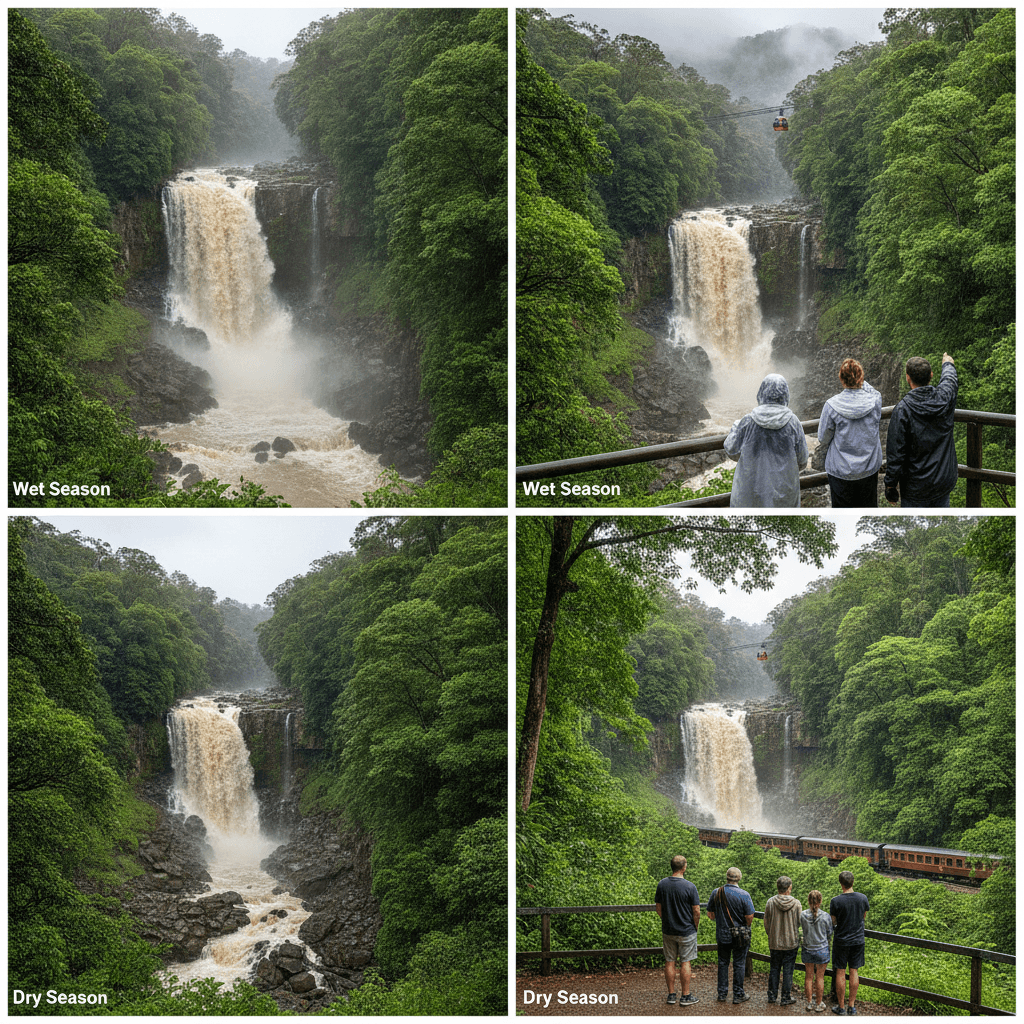
The wet season in Tropical North Queensland runs roughly from November through to April, with December, January and February typically delivering the heaviest rainfall. During this period, the Barron River swells considerably and the falls transform into something that demands attention. The volume of water pouring over the escarpment can be enormous, and the roar carries to the lookout platform well before the view opens up. The spray drifts across the gorge, the gorge walls run with rivulets, and the surrounding rainforest turns a deeper, more saturated green than at any other time of year.
The wet season also brings dramatic skies. Morning cloud and afternoon storms are common, which means lighting conditions shift quickly. Visiting in the morning tends to reward you with clearer views before the daily build-up of clouds, though even a misty gorge carries its own atmosphere. If you catch Barron Falls in full flood on a sunny wet-season morning, it is one of the most striking natural sights in Queensland, full stop.
It is worth noting that during the wet season, some roads and walking tracks in the region can be affected by rainfall and occasional flooding. Your guide will keep across current conditions and adjust the day's route if anything is likely to affect your experience or safety. That flexibility is one of the genuine advantages of travelling privately rather than on a fixed group schedule.
What the Dry Season Looks Like
The dry season runs from around May through to October, and this is when most visitors to Tropical North Queensland choose to travel. The weather is more reliably sunny, the humidity drops considerably, and the rainforest trails are at their most walkable. These are real reasons to visit during the dry season, and for many people the overall experience of a Kuranda day is more comfortable at this time of year.
The honest trade-off is that Barron Falls itself is far less dramatic in the dry months. The Barron River carries significantly less water by mid-winter, and what flows over the escarpment can be a modest stream tracing a path down an otherwise exposed rockface. For visitors who arrive expecting a wall of water, the dry-season falls can be a surprise. That is not a reason to avoid visiting the lookout during the dry season, the gorge itself remains stunning, the views across the canopy are superb, and the geological scale of the escarpment is striking year-round, but it is worth going in with accurate expectations.
One interesting exception during the dry season occurs when the hydro scheme upstream releases water. On those days, the falls can surge unexpectedly back to something approaching wet-season scale. These releases are not always predictable far in advance, but a local guide who spends time in Kuranda regularly is far better placed to know whether a release is likely on a given day than any website or brochure can be.
The Shoulder Seasons: April to May and October to November
The shoulder periods on either side of the seasons often deliver the best of both worlds. In April and May, the wet season rainfall is tapering off, the humidity begins to ease, and the Barron River is still carrying good volume from the months just passed. The falls remain impressive, the rainforest is lush and vivid, and the weather is becoming more reliably pleasant. October and November work similarly in reverse: the dry season is wrapping up, the first rains begin to arrive, and there is an anticipatory energy to the landscape as the rainforest prepares to green up again.
If you have flexibility in your travel dates and seeing the falls at their most powerful is a priority, aiming for late March through May gives you the best combination of impressive water and increasingly comfortable conditions.
Getting to the Barron Falls Lookout
The main lookout above Barron Falls sits within Barron Gorge National Park and is accessible from Kuranda village. The walk from the village centre is pleasant and passes through genuine rainforest, which is rewarding in its own right regardless of the season. The lookout platform itself frames the gorge well and gives a clear view across to the falls when water is flowing.
Because the falls lookout is a natural stop within a broader Kuranda day, it fits neatly alongside the village's markets, wildlife encounters and rainforest walks. The falls are not a destination that demands hours on their own, but paired with the rest of what Kuranda offers, the lookout visit becomes part of a genuinely full and satisfying day. Arriving with a local guide means you can ask questions about what you are seeing, the geology, the hydrology, the history of the gorge, and get genuine answers rather than a printed panel.
Planning Around the Season
Whichever time of year you are visiting, a few things are worth keeping in mind. Barron Falls is a highlight of a Kuranda day rather than the whole of it. The village, the markets, the wildlife sanctuaries and the surrounding rainforest all deliver strongly regardless of season. So even if the falls are quieter than expected, the day itself remains excellent.
If the falls are a particular priority for your group, mention it when you are putting together your itinerary. A local guide can factor in timing, current water conditions and the likelihood of any upstream releases to put you at the lookout at the most rewarding moment of the day.
For families, the unhurried private pace of the day means you are never rushing past the lookout to keep up with a group schedule. Children have time to take in the view, ask questions and simply absorb the scale of what they are looking at. Child car seats are supplied as standard, so the logistics of getting there are handled from the moment of pickup.
To see how Barron Falls fits into a full private Kuranda day, and to build an itinerary that suits your group's timing and interests, the Build Your Kuranda Day configurator is the easiest place to start. You can also read more about things to do in Kuranda to get a sense of everything the village has to offer across the seasons, and explore the wet season guide for broader advice on visiting the region during the wetter months.
Ready to plan your own Kuranda day?
Build a private, door to door itinerary in a few taps and get a free personalised plan.
Build Your Kuranda Day →More from the Travel Guide
 Kuranda Travel Guide
21/08/2026 (Sat)
Kuranda Wildlife Experiences: Koalas, Birds, Butterflies and More
Kuranda packs an extraordinary range of wildlife encounters into a compact rainforest village. Here is how to fit koalas, birds, butterflies and reptiles into one well-paced day.
Read More →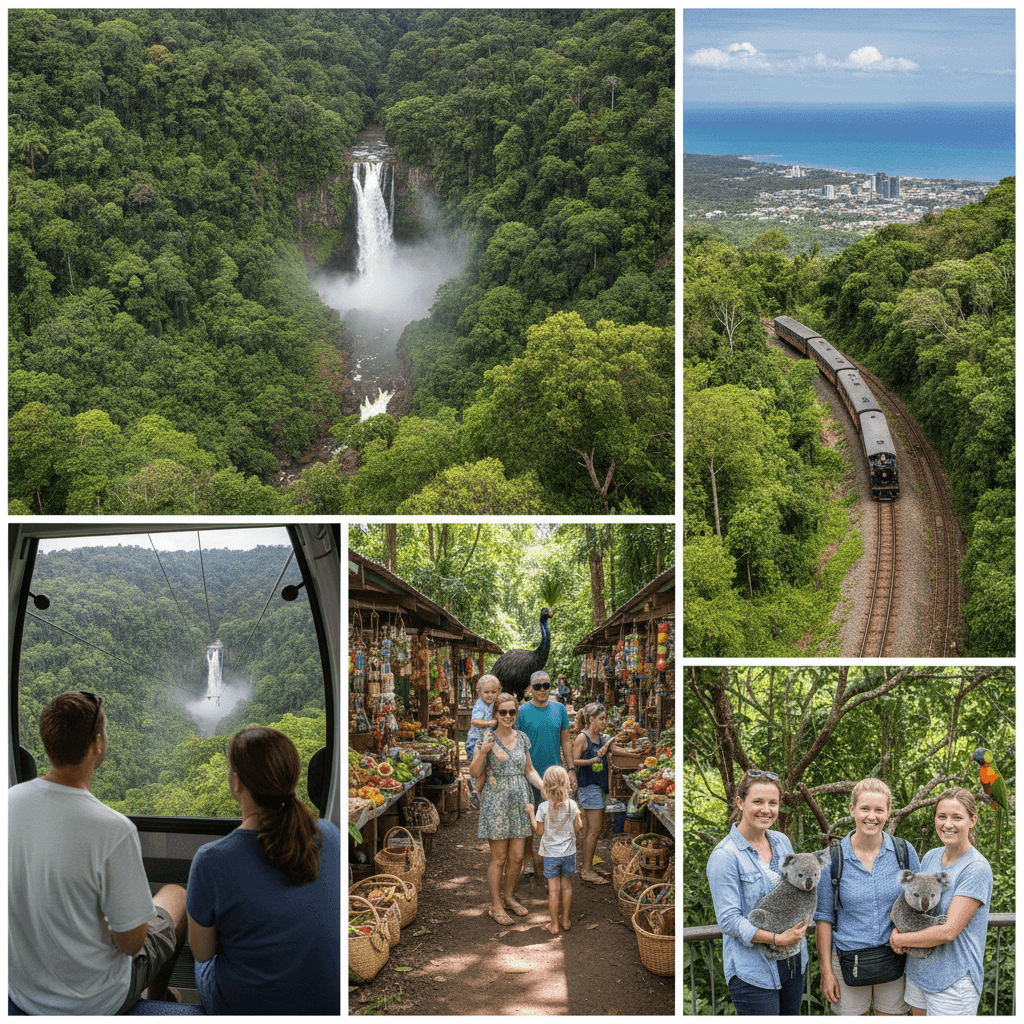 Kuranda Travel Guide
19/08/2026 (Wed)
Kuranda in One Day: What to Do, See and Skip
A single day in Kuranda can cover markets, wildlife and rainforest walks without feeling rushed, if you plan it well. Here is what fits and what to leave for next time.
Read More →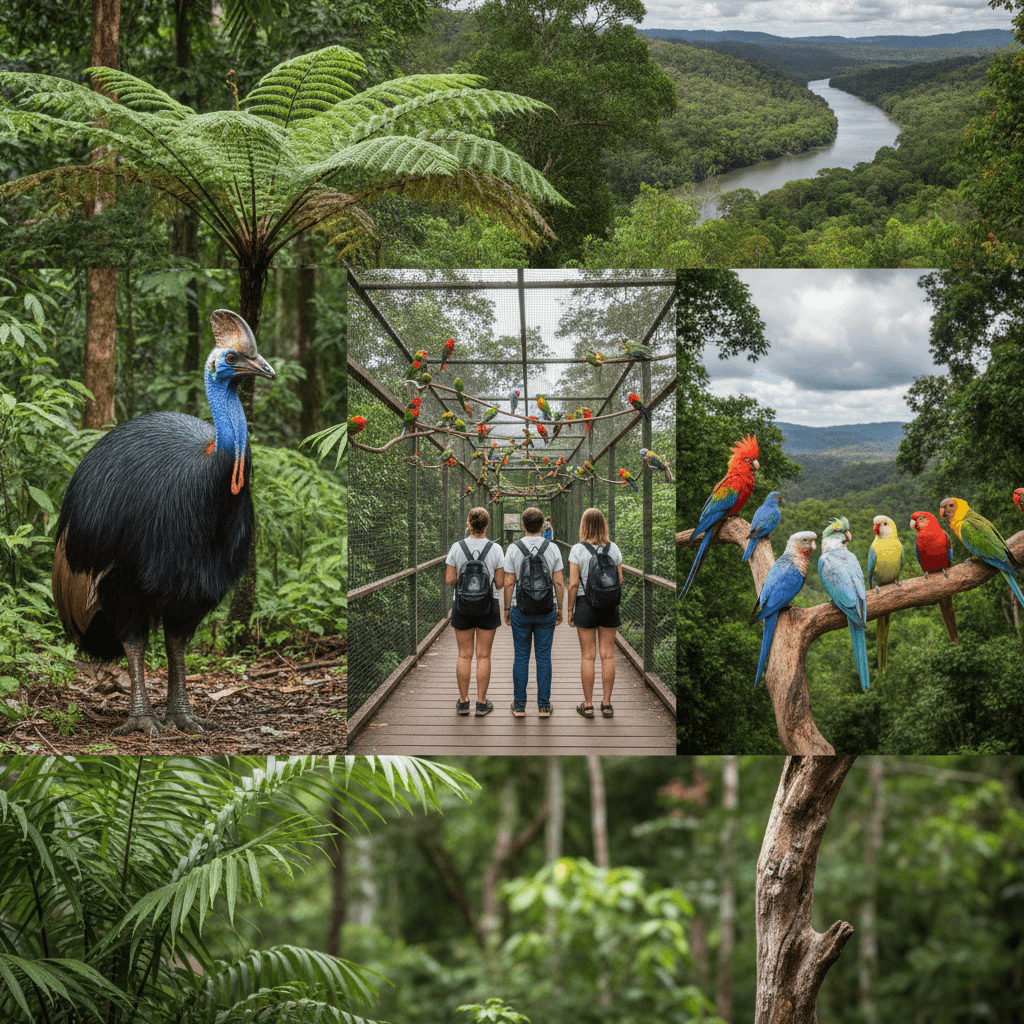 Kuranda Travel Guide
13/08/2026 (Fri)
Birdworld Kuranda: Your Complete Visitor Guide
Birdworld Kuranda is one of the village's most immersive wildlife encounters, putting you inside a free-flight aviary with some of Australia's most spectacular birds. Here's everything you need to know before you visit.
Read More →Get rainforest insights delivered
Tour tips, wildlife updates, and seasonal highlights. No spam, unsubscribe anytime.